Skip to content

Mahé Travel Guide for Tourists


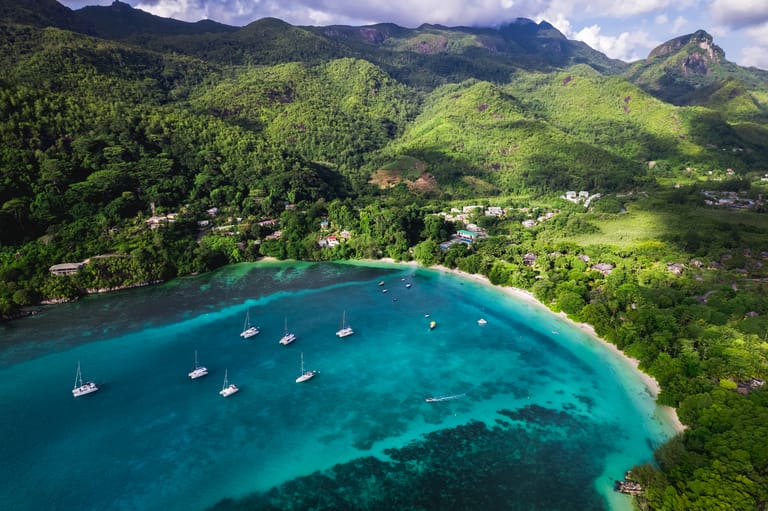
Mahé is the only island in the Seychelles where you can watch fruit bats stream across a granite skyline while a bus packed with schoolchildren in immaculate uniforms rattles past a takeaway counter selling octopus curry for less than three dollars. Most visitors treat it as a corridor to Praslin and La Digue — a place to land, sleep off the flight, and leave. Mahé travel guide for tourists is written with the southeast trade wind season — May through October — in mind.
Its narrow roads coil through rainforest that hasn’t been cleared for a postcard, its back lanes end in Creole diners with no English menus, and its western beaches fire up at sunset with a local surf scene indifferent to luxury tourism.
At just under 30 kilometres end to end, Mahé is still drivable in an hour, yet it holds the country’s capital, its only international airport, and nearly 90 percent of its population.
That gives it a split personality: by day, Victoria hums with commerce and government; by late afternoon, the mountains cast shadows over empty coves that feel further from the world than a map can convey.
During these months, the East Coast takes heavy swell, but the west and south offer calm mornings, crisp light, and the best hiking conditions.
If you’re visiting in the northwest monsoon (November to April), you’ll swap breeze for humidity and find the east coast beaches far more swimmable — though snorkelling on the north shore can turn milky with runoff.
Best Beaches & Snorkelling Spots
Beau Vallon
Beau Vallon is Mahé’s most democratic beach, a broad crescent of pale sand on the northwest coast where Seychellois families, tourists, and after-work footballers share the same stretch of shoreline.

The bay stays calm throughout the southeast trade wind season, making it the most reliable swimming spot on the island from May to October. A fringe of takamaka trees and low-key food stalls gives it a lived-in feel rather than a manicured one.
Snorkelling is modest — head to the rocky edges near the northern end for the best chance of seeing small reef fish and the occasional stingray half-buried in the sand. Access is easy via public bus from Victoria, and there’s ample parking if you’ve rented a car.
Anse Intendance
Anse Intendance is the beach that reminds you that the Indian Ocean doesn’t always play nice. On the south coast, this half-moon of white sand slams with shorebreak that can turn from photogenic to dangerous in a single set.
It suits confident surfers and anyone happy to walk a dramatic shoreline without getting in deeper than their knees.
Swimming here is regularly unsafe, and there are no protective reefs to soften the energy.

Snorkelling is essentially nonexistent. The beach is accessed via a public path beside the Banyan Tree resort; the gates are open to non-guests. The southern swell is biggest during the southeast monsoon, which only amplifies the spectacle — but stick to the sand if the red flags are up.
Anse Royale
Anse Royale is Mahé’s family beach, a long shallow lagoon on the southeast coast protected by a fringing reef that tames the open ocean into something closer to a saltwater nursery.
At low tide, the water retreats far enough to expose seagrass beds, so plan your swim for mid- to high tide.
Snorkelling here is best during the northwest monsoon (November to April), when lighter winds mean better visibility inside the lagoon; you can drift over small coral bommies and watch juvenile fish dart between the rocks.
Access is straightforward — the road runs directly behind the beach, and there are small grocery shops across the street for cold drinks and coconut oil.
Petite Anse
Petite Anse is a pocket cove in the southwest squeezed between two heavy arms of granite, its sand the colour and texture of sifted coconut flour. The setting feels exclusive — the Four Seasons Resort overlooks the bay — but a public right of way keeps it open to anyone who finds the small access path.
The water here is typically flat during the southeast trade wind season, when westerly swells are minimal, making it a calm spot for a quiet dip.
Snorkelling is limited to the rocks at either end, and even then, only when the sea is particularly settled. Come early in the morning to have the cove to yourself before the resort daybeds fill.
Hiking & Nature: Mahé Beyond the Shoreline
Morne Seychellois National Park covers more than 3,000 hectares of Mahé’s interior, a steep massif blanketed in secondary forest where cinnamon, pandanus, and invasive albizia tangle on slopes that rise to 905 metres.
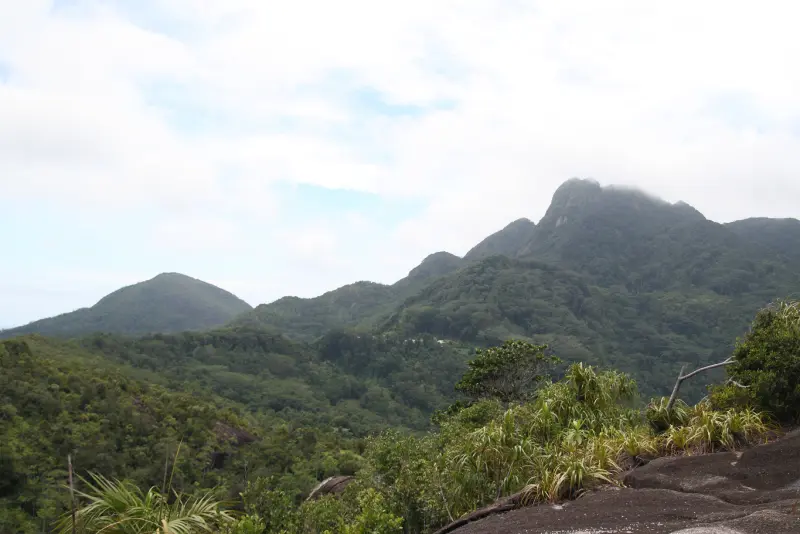
Trail markings have improved in recent years, but paths can be root-snarled and slippery even in the dry season — wear proper shoes.
The Copolia Trail is the most accessible serious hike on the island: moderate, roughly 1.5 to 2 hours round trip, climbing through dense forest to a bare granite dome. From the summit, Victoria and the entire east coast unroll beneath you, along with the distant shapes of Praslin and La Digue.
Look for the endemic pitcher plant Nepenthes pervillei growing in the shallow soil near the top — these small, wine-coloured traps are easy to spot once you slow down.
The Morne Blanc Trail is a steeper proposition — strenuous, 2.5 to 3 hours return, ascending via a series of steps cut into the hillside and sections of exposed root. The payoff is a sheer drop-off viewpoint facing the west coast, with the tea plantation at Port Glaud spreading below and the sea glinting beyond.
Start early; the cloud builds by mid-morning, swallowing the view.
Mahé’s endemic wildlife is real but not performative. The Seychelles black parrot — the species that appears on every conservation poster — is confined to Praslin, not Mahé.
Here, what you might see is the Seychelles blue pigeon, a patient, slate-coloured bird that watches from low branches, and the neon-green Seychelles day gecko clinging to tree trunks along the trails.
Aldabra giant tortoises live in enclosures and hotel grounds across the island; they’re not wild on Mahé, but they’re impossible to miss, ponderous and prehistoric, grazing on grass that someone planted for them.
Where to Stay: Three Tiers, No Fluff
Budget (under ~€80/night):
The sweet spot for budget travellers on Mahé is a family-run guesthouse or self-catering apartment in the southeastern neighbourhoods of Anse Royale or Anse Forbans.
These are typically simple, tiled-floor units with a kitchenette, a terrace, and a host who may leave you a bunch of bananas from their garden.
Staying here puts you close to Anse Royale’s lagoon and within driving distance of the south coast’s wilder beaches without the Beau Vallon price tag. Search current listings for guesthouses in Anse Royale — options in this category shift regularly.
Mid-range (€80–200/night):
Avani Seychelles Barbarons Resort & Spa on the west coast fills this bracket with comfortable, unpretentious rooms set along a palm-shaded beach.
The location strikes a useful balance: you’re 20 minutes from Victoria and 30 minutes from the southern beaches, and the calm Barbarons Bay is swimmable throughout the southeast monsoon.
A large pool and decent Creole buffet make it a practical base for travellers who want hotel services without the private-island markup.
Luxury (€200+/night):
Four Seasons Resort Seychelles at Petite Anse justifies its price with something rare on Mahé — a genuine sense of seclusion built into a steep hillside of treehouse-style villas, each with a private plunge pool and an uninterrupted stare at the Indian Ocean.
The beach below is shared with the public, but the service, spatial privacy, and topography make the resort feel like an island within the island. It’s the choice for travellers who want the drama of Mahé’s granite coast without a single compromise on comfort.
Food, Drinks & Local Cuisine
Creole food on Mahé is an argument made in coconut milk and charcoal smoke. Grilled fish — usually jobfish or capitaine — arrives simply dressed with lime, chilli, and a mound of rice. Octopus curry, cooked slowly until the flesh softens, is the dish to order when you see it on a handwritten board.
Ladob, a dessert of ripe banana or sweet potato simmered in coconut cream with vanilla and nutmeg, tastes like a warm, spoonable custard. Breadfruit appears as chips, boiled wedges, or mashed into a starchy side that absorbs sauce better than rice ever could.
The Sir Selwyn Selwyn-Clarke Market in Victoria is the island’s sensory core: fishmongers gutting red snapper on wet concrete, pyramids of turmeric and cinnamon bark, and an upstairs gallery where small stalls sell grilled fish parcels and octopus salad for a fraction of beach-restaurant prices. That gap is worth understanding.
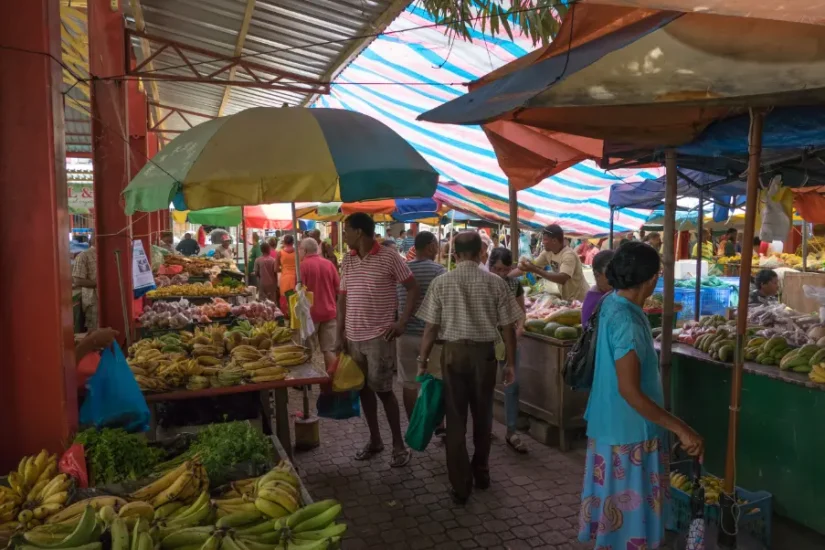
A sit-down dinner on the sand in Beau Vallon can push past €40 per person without wine; a takeaway box of curry and rice from a local counter — the kind with plastic chairs and a loud radio — might cost €6.
Neither experience is inauthentic, but only one will teach you how Seychellois actually eat on a Tuesday.
Wash it down with a cold Seybrew lager, a beer that tastes precisely like a tropical afternoon demands it should, or with the water of a fresh king coconut hacked open by a roadside seller for pocket change.
Local rum, particularly the Takamaka brand, is worth drinking neat or in a simple rhum arrangé infused with vanilla, coconut, or local citrus.
The food here tells the story of the Seychelles more honestly than any resort brochure — African, French, Indian, and Chinese influences layered into one pot over a charcoal fire.
Getting Around Mahé
Rent a car. Mahé’s public buses are cheap and surprisingly extensive along the coastal roads, but they thin out dramatically after 7 p.m. and on Sundays, and they won’t take you to most trailheads or the tucked-away southern coves.
A small hatchback costs about €40–50 per day, puts you in control of an itinerary the bus network can’t deliver, and handles the narrow, winding roads without drama — just drive on the left and expect the occasional roadside pig.
Taxis are available but require negotiation. Drivers often decline to use the meter, preferring a flat fare agreed before the door closes. Expect to pay roughly €15–25 for a short hop within the Victoria area and closer to €40–50 from the airport to Beau Vallon; clarify the price, then get in.
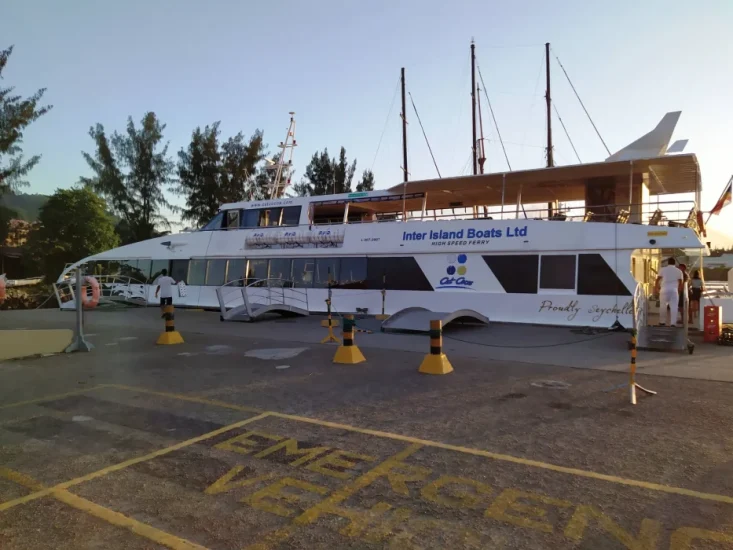
The Cat Cocos ferry from Victoria to Praslin runs multiple times daily, with a crossing of about one hour. The connecting ferry from Praslin to La Digue takes 15–20 minutes.
Book passages ahead during peak periods, especially if you’re on a tight timetable, but don’t plan your Mahé days around a ferry that hasn’t been bought yet — weather can delay afternoon departures.
Budget & Practical Travel Tips
| Category | Budget Traveler | Mid-Range Traveler |
|---|---|---|
| Accommodation | $60–80 | $150–250 |
| Food | $15–25 | $40–70 |
| Transport | $10–15 (bus + occasional taxi) | $45–60 (rental car) |
| Activities | $0–10 | $20–50 |
| Daily Total | $85–130 | $255–430 |
Figures assume mid-2024 to early 2025 conditions, per person, based on double occupancy for accommodation. USD is widely accepted alongside euros, though change is often returned in Seychellois rupees.
- Best time to visit: May to October (southeast monsoon) for drier, cooler hiking and calm west-coast beaches; November to April (northwest monsoon) for greener scenery and calmer east-coast swimming, but expect higher humidity and occasional seaweed on northern shores.
- Visa on arrival: Most nationalities receive a free visitor’s permit valid up to three months. You’ll need a passport with six months’ validity, proof of onward travel, and confirmed accommodation details — officers may ask for them.
- Currency: Seychellois rupee (SCR). Euros and US dollars are used freely in tourist-facing businesses; smaller shops and takeaway counters deal in rupees.
- Tipping: Not required. A service charge is typically included in restaurant bills; rounding up a taxi fare or leaving small change at a guesthouse is appreciated but never demanded.
- Connectivity: Buy a local SIM from Cable & Wireless or Airtel at the airport kiosks for reliable data. Hotel Wi-Fi varies sharply — properties in the mountainous interior often have patchy connections that can’t handle video calls.
Final Verdict: Worth It or Overhyped?
Mahé is the right destination for travellers who want a working island, not a stage set. It rewards anyone willing to trade the manicured predictability of a resort atoll for mornings on a granite peak with only white-eye birdsong, afternoons in a curry-scented market, and a coastline that shifts personality by the compass point.
If your benchmark is the Maldives — uninterrupted lagoon views, no traffic, no town, Mahé will frustrate you.
What Mahé does better than any other Indian Ocean island is this tension between the wild and the lived-in.
Nowhere else in the Seychelles can you stand on a summit overlooking a capital city and hear nothing but wind through cinnamon leaves, then drive 20 minutes to a beach where local surfers are paddling out as the sun drops.
Its genuine weakness is the East Coast during the trade wind season, when rough seas and drifting seaweed make some otherwise beautiful stretches unappealing for days at a time. The island doesn’t apologise for its rough edges, and it shouldn’t have to.
If that unvarnished texture sounds like the Seychelles you came to find, Mahé is the only place that delivers it.
Planning a Seychelles trip? My next piece covers the ferry hop to Praslin and the Vallée de Mai — a forest where coco de mer palms cast prehistoric silhouettes, and the air smells like damp earth and eternity.
Subscribe to get it in your inbox before you book your inter-island tickets.
FAQs: Mahé Island travel- everything you need to know for a trip to Mahé and Victoria, Seychelles
What are the top beaches and attractions on Mahé island?
Mahé is known for beautiful beaches and attractions such as Beau Vallon Beach, Anse Takamaka, Port Launay, and postcard-perfect white-sand coves with granite boulders and palm trees. Visitors often combine beach days with short trips to the botanical gardens near Victoria, sunset views along the coast road, and snorkeling in the turquoise water off the coast of the island.
How do I get around Mahé and reach Victoria, the smallest capital?
Getting around Mahé is easiest by rental car or taxi; the coast road connects many points from the west of the island to the south of the island and back to Victoria, the smallest capital in the world.
There are also buses serving populated island areas and boat transfers to nearby islands like Round Island and the six small islands in nearby groups. For quick transfers to Eden Island marinas and luxury hotels like Constance Ephelia or the Hilton Seychelles, taxis or private transfers are recommended.
Where should I stay in Mahé: accommodation options and boutique hotels?
Accommodation options on Mahé range from many hotels and boutique hotel stays to self-catering villas on Eden Island and family-run guesthouses near Beau Vallon. You’ll find everything from luxury resorts with spa facilities to smaller boutique hotel properties and budget-friendly guesthouses; staying in Mahé lets you choose proximity to beaches, nightlife, or the calm of the south of the island.
What are the best day trips from Mahé for island hopping or nature?
Popular day trips include boat trips to Round Island, snorkeling at Port Launay, visits to a rum distillery or tea factory, and exploring the end of the island for hiking and great views. Short boat rides take you to six small islands nearby, and many tour operators run combined beach-and-snorkel trips that highlight the turquoise water and coral gardens.
When is the best time to visit Mahé for good weather and water activities?
The best time for a trip to Mahé is generally between December and February for warm weather, though trade winds can make April to October favorable for diving and calmer seas. Peak tourist periods vary, but overall, the island offers pleasant conditions most of the year for swimming, snorkeling, and enjoying the palm trees and turquoise water.
What local foods and places to eat should I try on Mahé?
Mahé’s food scene includes Creole dishes, fresh seafood, and beachside grills; don’t miss local spots like Chez Batista for Creole specialties. Victoria has cafés and restaurants near the harbor and the tea factory area, while Beau Vallon offers beachfront dining. Many places to eat serve locally made rum and dishes flavored with spices and coconut.
Is Mahé family-friendly, and what activities suit kids?
Mahé is very family-friendly: calm beaches like Beau Vallon and Port Launay are ideal for children, and activities such as boat trips, snorkeling in shallow turquoise bays, nature walks, and visits to botanical gardens and the small tea factory provide mixed educational and fun experiences for all ages.
Are there cultural sites and historic attractions to visit in Victoria and across Mahé?
Victoria and Mahé offer cultural highlights, including the Hindu temple, colonial architecture in Victoria, markets, and small museums. The rum distillery and local craft markets provide insight into Seychellois culture, while walking around Victoria—the smallest capital—lets you experience daily life and the populated island’s local attractions.
What practical tips should I know before visiting Mahé (visas, money, safety)?
Travelers should check visa requirements for the Seychelles and ensure passports are valid. The Mahe coast of the island has reliable services, ATMs in Victoria and Eden Island, and many hotels accept cards, but carry some cash for markets and small vendors.
Safety is good, but exercise usual precautions on coastal roads and when swimming at less protected beaches. For the best tips on packing, health, and planning, include sunscreen, reef-safe swimwear, and reservations for popular accommodations during high season.