

Best Travel Power Banks for Long Trips and Airport Security-Friendly Designs


Power banks keep phones, cameras, and other devices charged when outlets are scarce, which makes them essential for travel. They come in many sizes and capacities, from pocket-sized units that give a quick boost to high-capacity packs that can recharge laptops and several devices. We focus on travel power banks designed for portability, safety, and reliable charging on the go.
The key things to check are capacity (mAh), output power (watts and ports), weight and size, and safety features like overcharge protection and certified batteries.
Choosing the right balance of capacity and size is the most important decision for travelers because it determines how many charges you get without adding too much weight. We tested and compared models across those factors to find the best options for different kinds of trips.
Best Travel Power Banks
We tested and compared top travel power banks to find reliable chargers that are small, fast, and easy to carry. Below is our list of the best options for keeping phones, tablets, and other devices powered on the go.
Anker 25K Laptop Power Bank

We recommend this if you need high-capacity, fast charging for laptops and multiple devices on long trips.
Pros
- Charges a laptop and other devices fast.
- Built-in cables mean fewer things to carry.
- Airline-friendly for checked carry-on use.
Cons
- Heavier than small phone power banks.
- Needs a strong wall charger to recharge quickly.
- Built-in cables limit cable length and flexibility.
We used this Anker on a week-long trip, and it handled my laptop, phone, and earbuds without complaint. The triple 100W USB-C ports let us power several devices at once, and that made working away from home easier.
The built-in retractable cable is handy for packing. It saved us from hunting for cables, and the short strap cable doubled as a grab handle when hiking.
Recharging the pack is really fast if you pair it with a high-watt wall charger. We noticed slower top-ups with low-power chargers, so bring a 45W or higher brick if you want the fast charge times.
Anker 20K Power Bank

We recommend this if you want a durable, fast charger that keeps phones and laptops running on trips.
Pros
- Built-in USB-C cable means one less cord to forget.
- Fast charging that revives phones and quickly boosts a laptop.
- Airline-friendly capacity and solid battery life for multi-day use.
Cons
- Heavier than pocket-sized banks, it adds weight to a carry bag.
- Only one built-in cable type is available; you may need additional cords for other devices.
- Feels warm under heavy use, so keep it ventilated.
We took this on a two-day trip and used it every day. The built-in cable saved us from digging through our pack, and phones went from low to usable fast. It handled a laptop top-up too, which was surprisingly handy during a long layover.
We liked how the battery lasted through several phone charges without drama. Recharging the power bank itself was quick when we had access to a 65W charger. The unit can get warm when charging a laptop and phone at the same time, so we didn’t keep it inside a pocket while using it.
We found the size comforting for longer travel, but noticeable in a small daypack. If you want worry-free, fast power and don’t mind the extra ounces, this feels like a reliable choice.
INIU 45W Slim Power Bank
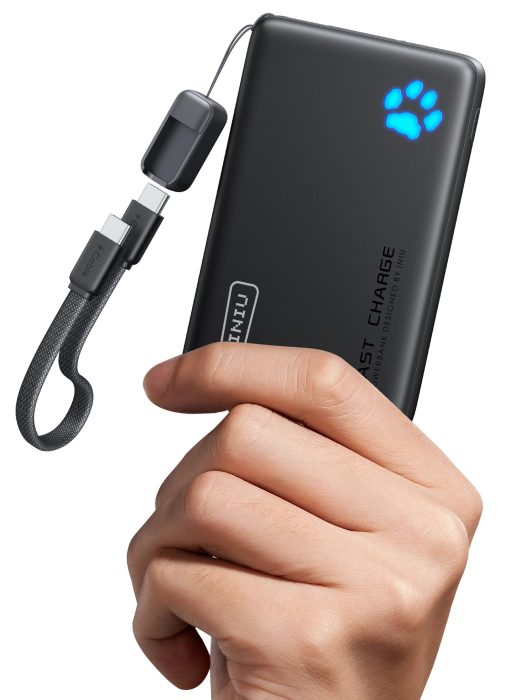
We recommend this if you want a slim, fast 10,000mAh charger that fits in a pocket and can top up multiple devices quickly.
Pros
- Very slim and light for the capacity.
- Fast 45W USB-C charging and two USB-C ports let us charge phones quickly.
- Can power three devices at once in tight travel situations.
Cons
- Heavier than ultra-mini chargers despite being slim.
- Not the highest capacity for long trips without access to a wall charger.
- Soft-touch finish can pick up scuffs over time.
We used this INIU power bank on a weeklong trip and liked how it slipped into a jacket pocket. The slim shape made it easy to carry, and the soft-touch surface felt secure in our hand.
Charging was noticeably quick. Our phone hit a big jump in battery during short breaks, and the second USB-C port let us top up a tablet while the phone charged. Being able to plug in USB-C cables both ways simplified what cords we needed.
We found the three-port charging handy in airports when outlets were scarce. Still, on a multi-day outing without recharging, the 10,000mAh limit meant we had to ration power if we ran multiple devices all day.
Overall, this feels like a travel-first power bank that balances speed, size, and real-world use for everyday trips.
Anker Nano 10K (45W)

We recommend this if you want a compact, fast charger that fits pockets and carry-ons without fuss.
Pros
- Small and light for travel.
- Fast charging for phones and quick recharge of the pack.
- Built-in retractable cable keeps things tidy.
Cons
- Retractable cable limits reach and replacement options.
- Not ideal for charging multiple large devices at once.
- Display and smart features add slight bulk.
We took this on a few weekend trips and used it for phones, a tablet, and on-the-go top-ups. The size surprised us — it slips into a jacket pocket and stays out of the way. Pulling the cord is easy, and it held up fine through daily use.
Charging felt fast and reliable. Our phone hit 50% quickly, and the power bank refilled faster than older models we’ve tried. The screen that shows charge time helped plan when to plug in before a travel day.
One downside: the built-in cable is convenient but short. We missed a longer lead when using a tablet on a tray table. Also, if that cable ever fails, you can’t swap it out like with standard ports.
Overall, this feels like an honest travel tool: sturdy, speedy, and designed to reduce cable clutter while you’re on the move.
Anker PowerCore 10K

We recommend this if you want a thin, reliable travel charger that fits in a pocket and tops off phones quickly.
Pros
- Very slim and easy to carry on flights or in a small bag.
- Charges phones fast enough for day trips.
- Feels tough and holds up to daily bumps.
Cons
- Takes a while to fully recharge itself.
- Only about two full phone charges for modern phones.
- No wireless charging option.
We carried this on a weeklong trip and liked how little space it took in our day pack. It slid into a jacket pocket and didn’t add bulk, yet it still rescued our phones after long transit days.
We used it to top off phones between museum stops and on trains. The speed was reliable, and our devices reached usable battery levels quickly, though the pack itself needed several hours to fill back up when we recharged it.
We noticed the build is solid and resists scuffs, which matters when you toss it in luggage. If you need many full charges or want wireless power, look elsewhere, but for light travel, this was a dependable pick.
Anker 10K 30W Power Bank
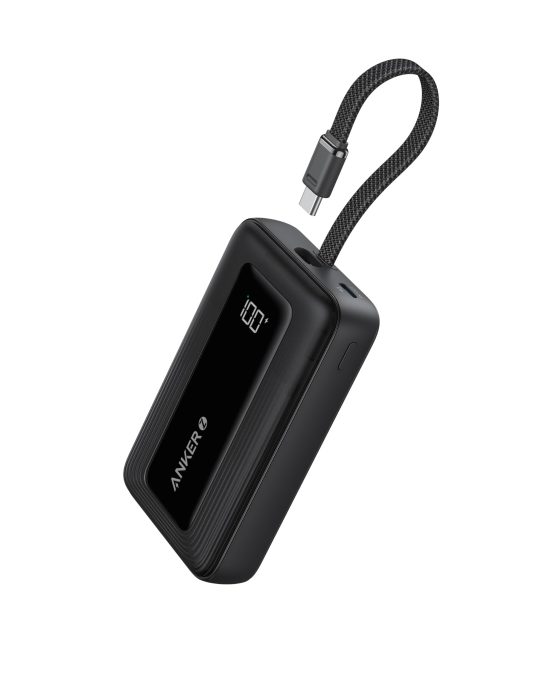
We recommend this if you want a compact, fast charger that actually fits in a carry-on pocket and keeps phones topped up on travel days.
Pros
- Fast 30W charging speeds that cut real wait time.
- Built-in USB‑C cable so you don’t hunt for cords.
- Small, light, and easy to carry for flights and day trips.
Cons
- Built‑in cable limits how you can position devices while charging.
- Takes a while to refill the power bank itself.
- Not ideal if you need huge multi‑day capacity.
We carried this Anker on a four‑day trip and liked the way it disappeared into our bag. It charged our phone quickly between museum stops and morning flights, and the weight never felt like a burden.
We used the built‑in USB‑C cable nonstop and appreciated not packing an extra lead. The cable snaps into place cleanly and survives being jammed into pockets and pouches without loosening.
We noticed the bank itself takes longer to top up than it charges phones, so plan to plug it in overnight before travel. Overall, it felt reliable, fast for everyday use, and just the right size for most trips.
JKELAR 50000mAh Power Bank

We recommend this power bank if you need a very long runtime, built-in cables, and rugged features for travel and camping.
Pros
- Huge capacity keeps devices charged for days.
- Built-in iOS and USB-C cables mean fewer cords to pack.
- Bright LED display and flashlight help outdoors.
Cons
- Size and weight feel bulky compared with pocket models.
- 22.5W PD is fast but not the fastest for flagship phones.
- May be overkill if you only need one full phone charge.
We took this on a three-day car trip, and it held up well. The big capacity truly lasted through multiple device charges, and we liked not fumbling for extra cables. The LED readout let us plan when to recharge the bank.
Carrying it in a daypack felt a bit heavy, but it stayed sturdy on rough trails and the built-in flashlight came in handy at night. Charging two phones and a tablet together worked without drops in speed, which made group travel easier.
We used the USB-C to top off a phone quickly and saw real gains compared to small banks. Still, if you only want something ultra-light for daily use, this unit might be more than you need.
Anker Prime 26K (300W)

We recommend this if you need a compact, TSA-approved power bank that charges laptops and phones very fast.
Pros
- Very fast charging both out and in.
- Small for its capacity and easy to pack.
- App and display give a clear status and control.
Cons
- Heavier than phone-only banks.
- Base charger not included, so you may need a powerful adapter.
- Some features need the app to be useful.
We carried this on a short work trip and found it handled two devices at once without fuss. Laptops and phones topped up quickly, and the digital readout made it simple to see how much power was moving. It felt solid in the hand and fit in a jacket pocket.
Recharging the unit surprised us — it went from near-empty to usable much faster than older banks we’ve used. That ultra-fast input matters when time is tight. Keep in mind you need a high-wattage charger to get those speeds.
We liked the integration with the app for tuning output and watching temps, which gave us confidence during long charges. The main downside was carrying a slightly heavier device than a phone-only bank and needing to bring a proper wall adapter to exploit the full speed.
Charmast Slim 10K Power Bank
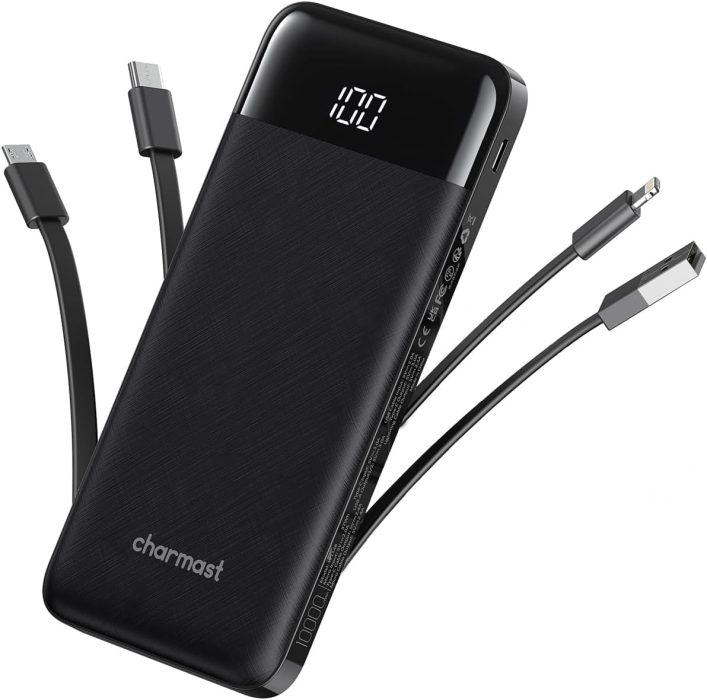
We recommend this charger for travelers who want built-in cables and a slim pack that handles multiple devices.
Pros
- Built-in cables remove the need to pack extra cords.
- Slim, light profile fits a pocket or small bag easily.
- The digital display shows the exact battery percent, so we know when to recharge.
Cons
- Built-in cables limit reach and can tug on devices while charging.
- Slower to fully recharge than some higher-capacity banks.
- Feels a bit heavier than its size suggests when carried all day.
We used this Charmast on a week of city travel and liked how quickly it became part of our routine. The three built-in output cables covered our phones and an older tablet without digging through the bag for adapters.
Charging six devices at once came in handy when friends needed a boost. The digital percentage was useful: no guessing how much power remained during a long day of photos and maps.
On the downside, the attached cords can be awkward when using a phone while charging, and the pack itself takes a few hours to top up. Still, for grab-and-go trips where we want fewer loose cables, this bank made travel simpler and more reliable.
Buying Guide
We look for capacity first. Choose a power bank with enough milliamp-hours (mAh) to recharge your devices the number of times you need. Larger capacity gives more charges but adds weight and size.
We check the output power next. Higher wattage charges phones and laptops faster. Look for USB-C PD or high-watt USB outputs if we need to charge laptops or fast-charge phones.
We consider ports and compatibility. Multiple ports let us charge several devices at once. Confirm the ports match our cables and device standards before buying.
We weigh size and portability. We balance capacity with how much we can carry. For air travel, pick a power bank that meets airline watt-hour limits.
We inspect safety features. Overcharge, short-circuit, and temperature protection keep our devices safe. Certified batteries and safety markings add trust.
We evaluate charging speed and efficiency. Bidirectional fast charging means the pack charges quickly and recharges itself. Higher efficiency wastes less energy and keeps output close to rated capacity.
We review extra features we might need. Built-in cables, LED indicators, wireless charging, and rugged casings can be useful. Only choose features that match our travel habits.
We compare price vs. value. Higher cost can mean better components and safety. Decide which features matter most and pick the best balance for our trips.
| Feature | What to look for |
|---|---|
| Capacity | mAh rating for needed charge cycles |
| Output | USB-C PD, wattage (W), number of ports |
| Size/Weight | Portable vs. high-capacity tradeoff |
| Safety | Protections and certifications |
| Extra features | Built-in cables, wireless, indicators |
| Travel rules | Watt-hour limits for flights |